Gardening Chigwell: Recycling and Sustainability for Local Green Spaces
 Gardening Chigwell is committed to creating an eco-friendly waste disposal area and a sustainable rubbish gardening area that supports healthy soils, reduced landfill and resilient community gardens. Our approach balances practical on-site sorting with broader collaboration across the district. We set a clear recycling percentage target — 65% recycling and composting by 2030 — and align our actions with neighbouring boroughs' approaches to waste separation to make it easy for residents to do the right thing.
To reach this recycling and sustainability goal we prioritise source separation and education. Garden waste, paper and card, clean plastics, metal and glass are separated at collection points and in community compost bays. We also encourage reuse of tools and planters through partnerships with community groups. This reduces the pressure on our local transfer stations, supports circular reuse and keeps soil-rich organic matter in the borough rather than sending it to residual disposal.
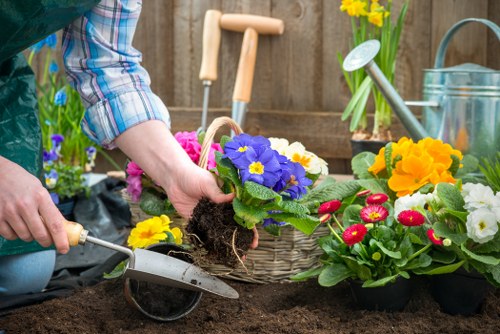
Sustainable Rubbish Gardening Area: Practical Steps
On-site, our sustainable rubbish gardening area follows clear colour-coded sorting and signage inspired by local council schemes. We adopt a borough-friendly model where residents and volunteers separate:
- green garden organics for composting
- mixed recycling for bottles, tins and clean plastics
- bulky recyclable items diverted to re-use partners
Local Transfer Stations and Logistics
We work closely with nearby transfer stations in the Epping Forest area and neighbouring boroughs to streamline the movement of separated materials. By coordinating collections with local authority transfer centres, we reduce double handling and mileage. Collections are scheduled to meet transfer station opening hours and to maximise the amount recycled or composted. This logistical alignment is essential to hit our 65% target without increasing costs for community projects.
Our fleet includes low-carbon vans to keep transport emissions low. We are transitioning to electric and hybrid vans and trialling small fully electric pickups for garden waste runs. The choice of low-emission vehicles reduces the carbon footprint of repeated trips to transfer stations and charity partners, making Gardening Chigwell’s operations part of the area's wider decarbonisation efforts.
Partnerships with charities and social enterprises form a core part of our reuse and redistribution strategy. Items like well-maintained tools, surplus planters and undamaged garden furniture are offered to local charities, allotment groups and community projects. These partnerships increase reuse rates and support local social goals while preventing perfectly usable items from being classified as waste.
We also support targeted schemes for material streams that benefit the most from reprocessing: woody chippings are used for mulches and pathways, small volumes of treated timber are routed to specialist recyclers, and green trimmings are composted to create nutrient-rich soil improvers for our community beds. This layered approach of reduce, reuse, recycle ensures Gardening Chigwell maintains soil health and reduces dependency on commercial fertilisers.
Community engagement is central: training sessions, open days and demonstration beds show how to separate waste correctly and why local transfer stations and charity partners matter. Volunteers learn simple sorting rules aligned with borough waste separation policies so materials are clean and accepted by reprocessors. Clear signage and convenient bin locations make separation intuitive, raising participation and reducing contamination in recycling loads.
Monitoring and reporting help us measure progress. We track volumes of green waste composted, recyclables diverted and rehomed items through charity partners, then report these figures against our recycling percentage target. Regular reviews inform improvements — for example, adjusting collection frequency, adding electric vehicle chargers, or expanding drop-off times at transfer stations. Together, these measures make Gardening Chigwell a model for a sustainable rubbish gardening area and an eco-friendly waste disposal area that communities can rely on.
Key Actions at a Glance
- Target: 65% recycling and composting by 2030
- Logistics: coordinated collections to local transfer stations and reduced mileage
- Fleet: low-carbon vans (electric and hybrid) for garden waste runs
- Partnerships: local charities and social enterprises for reuse
- Community: training and clear sorting aligned with borough approaches
What You Can Do
Bring separated materials to community bins, donate usable garden items to our partner charities, and opt into electric collection rounds where available. By supporting Gardening Chigwell’s sustainable rubbish gardening area, you help protect green spaces, cut carbon, and build a circular local economy.
Our combined work — practical on-site separation, smart transfer station use, charity partnerships and low-emission transport — creates an integrated path to sustainability that benefits gardens, neighbours and nature across Chigwell and the surrounding boroughs.